How Often Should a Commercial Building Be Repainted?
Repaint cycles depend far more on substrate, exposure, and prep quality than on a number in a maintenance manual. Here’s what actually drives the timeline on Whatcom County commercial buildings.
There’s No Single Number, But There Are Ranges
Ask three contractors and you’ll get three answers, because the honest answer depends on what your building is made of and where it sits.
As general planning ranges in our climate:
- Painted wood siding and trim: roughly 5 to 8 years
- Fiber cement: 8 to 12 years, sometimes longer
- Stucco and masonry: 8 to 15 years depending on coating and exposure
- Metal buildings: 10 to 15 years with an appropriate industrial coating
- High-traffic interiors: corridors and common areas every 3 to 5 years
Treat those as budgeting brackets, not promises. The variables below move them substantially in both directions.
What Shortens the Cycle Here
Weather exposure by elevation. The south and west faces of your building take the UV. The north side takes the moisture and grows the most algae. It’s completely normal for one elevation to need attention years before the others. Spot-recoating one elevation is often smarter than repainting the whole envelope early.
Moisture and organic growth. Our wet season feeds mildew and algae, which look bad and, worse, hold moisture against the coating and accelerate breakdown.
The quality of the last prep. This is the big one. A building prepped properly and coated with a premium product can double the service life of one that was rushed. If the previous repaint peeled early, the cycle isn’t the problem; the prep was.
Substrate movement. Buildings flex. Caulk joints fail before coatings do, and once water gets behind the siding, the countdown accelerates.
Traffic and contact. Interior corridors, stairwells, and entry areas wear from hands and carts, not weather.
One tip from years of walkthroughs: budget for caulking and trim repair on a shorter cycle than full repainting. Maintaining the joints protects the coating you already paid for, and it is the most consistently skipped item on this list.
The Signs That Set Your Actual Timeline
Rather than a calendar, watch for:
- Chalking: a powdery residue on your hand when you rub the siding. That is the binder breaking down, and it is the earliest reliable signal.
- Fading and color loss, especially on south and west elevations
- Hairline cracking in a grid pattern, meaning the film has lost flexibility
- Peeling or blistering anywhere, which means water is already involved
- Failed caulk joints at windows, trim, and control joints
- Persistent mildew that returns quickly after cleaning
- Exposed or rotting wood at fascia, trim, and belly bands
Chalking and failed caulk are the two worth acting on early. Both are cheap to address before they become substrate problems.
Planning Around Tenants and Operations
For occupied buildings (multi-family, retail, offices, medical), the schedule matters as much as the coating.
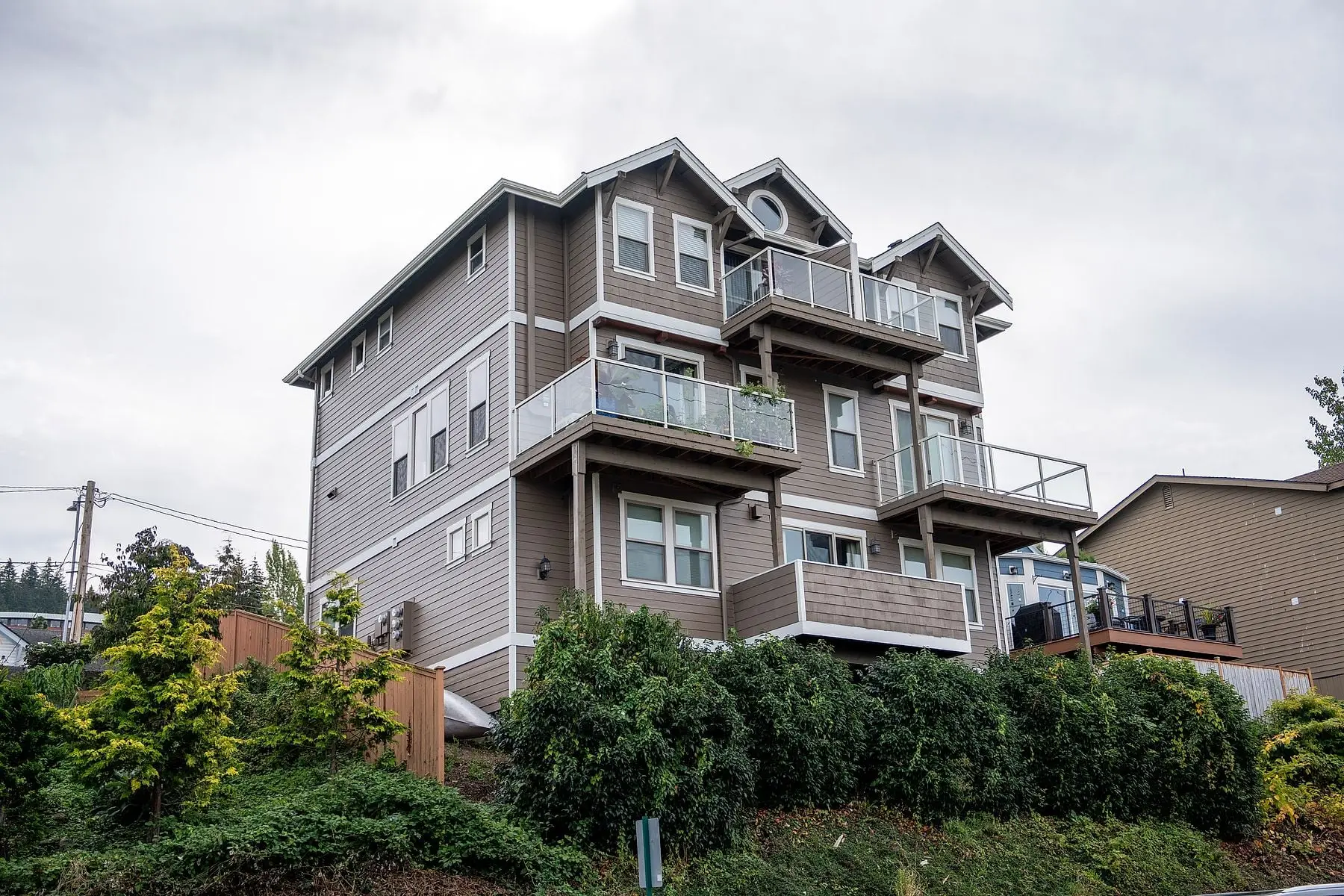
Multi-family and condominiums need coordination with residents and boards: notice before crews arrive, protection for balconies and patios, and predictable access. On a three-story condominium above Bellingham Bay, we worked elevation by elevation with masking around residents’ balconies so people could keep using their homes throughout.
Retail and restaurants usually mean early-morning or overnight work so the storefront is presentable at opening.
Offices and clinics often prefer evenings and weekends, with low-VOC products so spaces are usable the next business day.
Warehouses and industrial can frequently run during operations with proper sectioning.
The right contractor should be proposing a phasing plan, not just a price.
Budgeting It Sensibly
Two approaches that work better than reacting to failure:
Phase by elevation. Repaint the weather-facing sides on a shorter cycle and the protected sides on a longer one. It spreads cost and matches the actual wear.
Fund maintenance separately from repainting. An annual wash to remove mildew and algae, plus caulk inspection and touch-up, meaningfully extends the interval between full repaints. For an HOA or property manager, this is the highest-return line item in the exterior budget.
Key Takeaways
- Wood 5–8 years, fiber cement 8–12, stucco and masonry 8–15, metal 10–15 in our climate
- Prep quality on the last repaint affects lifespan more than any other single factor
- Chalking and failed caulk joints are the early signals worth acting on
- South and west elevations wear faster, so phase by elevation rather than repainting everything
- Annual washing and caulk maintenance is the cheapest way to stretch the cycle
We handle multi-family, retail, office, and industrial repaints across Whatcom and Skagit County, scheduled around your operations. See our commercial painting services or browse completed commercial projects.
Common Questions