Moss, Mildew & Your Siding: A Whatcom County Survival Guide
Our damp climate grows things on your house. Here’s how to tell moss from mildew from algae, how to clean each without wrecking your siding, and the coatings and habits that keep green off for good.
Why It Grows So Well Here
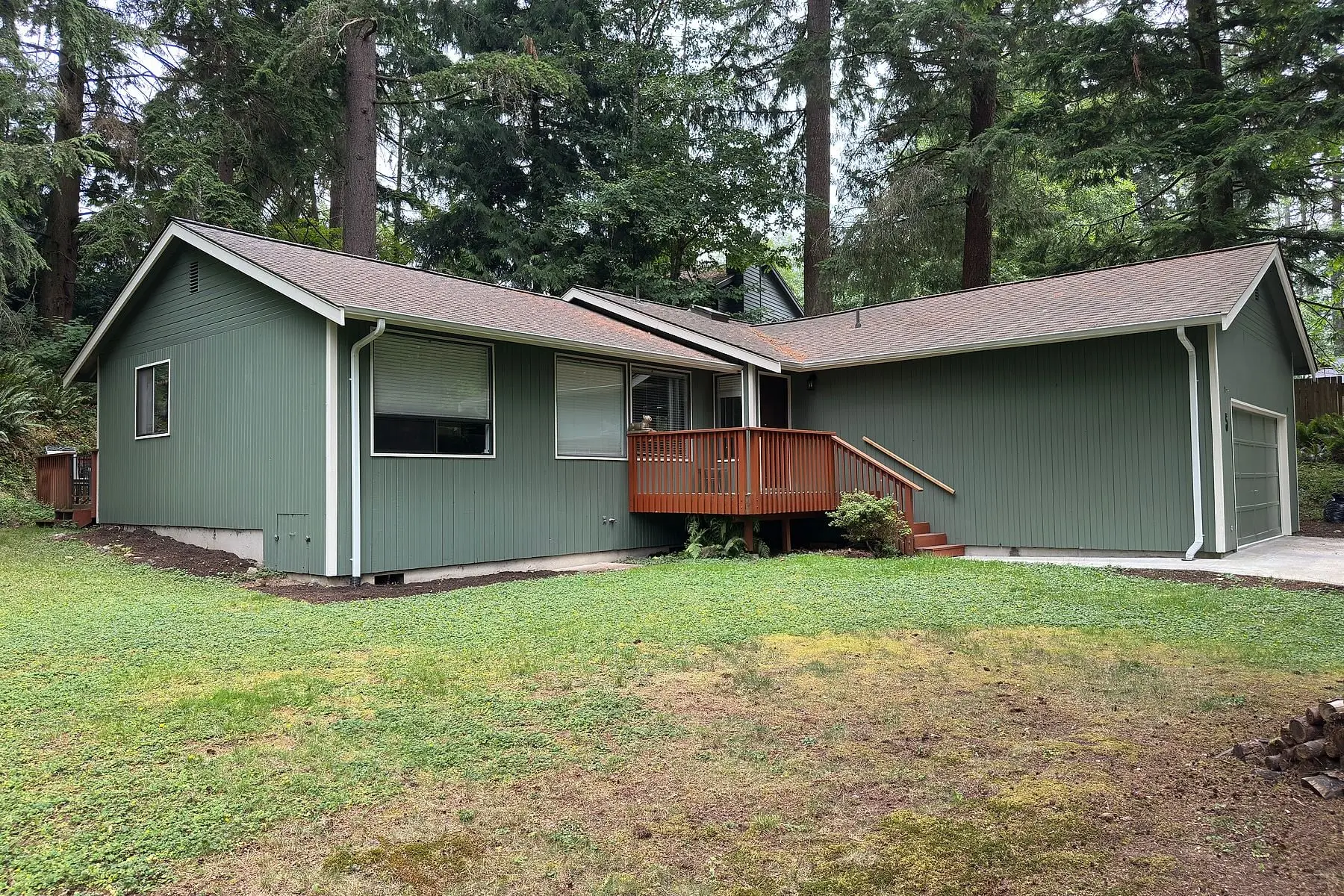
Whatcom County gives organic growth everything it needs: sustained moisture through a long wet season, mild temperatures that rarely kill anything off, plenty of shade from mature evergreens, and air that stays humid even between rains.
The north side of your house is where you’ll see it first. It gets the least sun, dries the slowest, and stays cool. Add an overhanging cedar or a fence line that blocks airflow and you’ve created ideal conditions.
This isn’t a sign of neglect. It’s the default condition here, and it’s manageable, but only if you know what you’re actually looking at.
Telling Them Apart
The three get lumped together and need different responses.
Algae is the green film or dark streaking you see running down siding, often below roof edges and gutters. It’s the most common of the three and mostly a surface and appearance problem, but it holds moisture against the coating.
Mildew shows up as black or dark gray speckling, often mistaken for dirt. Here’s the field test: dab a drop of household bleach on a spot. Mildew lightens within a minute or two; dirt doesn’t. Mildew feeds on the coating itself, which makes it more than cosmetic.
Moss is the thick, cushiony green growth on roofs, in gutters, at deck boards, and along the bottom of siding where it meets the ground. Moss is the destructive one. It holds a remarkable amount of water directly against the surface and its rhizoids work into any gap they find.
Moss growing at the base of your siding usually means splash-back from the ground or a grade that’s too high against the wall. Cleaning it off treats the symptom; fixing the grade or adding gravel treats the cause.
Cleaning Without Damaging Your Siding
This is where good intentions do real harm.
Pressure washing at high PSI is the most common mistake. Too much pressure drives water behind lap siding, gouges soft cedar, forces water into failing caulk joints, and can strip paint that was otherwise fine. On an older home it can create the exact moisture problem that causes peeling later.
The better approach is chemistry and patience rather than force:
- Wet the surface and the plants below it first.
- Apply an appropriate cleaning solution. For mildew and algae, a dilute bleach solution or a dedicated siding cleaner. For moss, a product with a moss-killing agent.
- Let it dwell long enough to actually work. This is the step everyone rushes.
- Agitate gently with a soft brush where growth is heavy.
- Rinse at low pressure, working top to bottom.
- Let it dry thoroughly, 48 hours or more, before any coating goes on.
For moss on a roof, resist the urge to scrape aggressively. Kill it, then let weather remove it. Scraping shingles causes more damage than the moss did.
Coatings and Choices That Resist Growth
You can’t paint your way out of shade and rain, but the choices matter.
Mildew-resistant formulations. Premium exterior lines include mildewcides. It’s standard in the products we spray, and it’s a meaningful difference over builder-grade coatings.
Darker colors hide streaking. Not a cure, but real. Part of why deep colors have become popular here is that algae streaking is far less visible on a dark body than on a light one.
Satin over flat. Flatter finishes have more surface texture for spores to grip and hold moisture. Satin sheds water better and cleans more easily.
Clean caulk joints and sound trim. Every gap is a place water sits. Maintaining the joints is genuinely part of mildew prevention.
Habits That Keep It Off
Clean the gutters. Overflowing gutters put a constant water stream down your siding, and that stripe is where algae takes hold.
Cut vegetation back. Aim for a couple of feet of clearance between shrubs and siding. Airflow and light are what keep surfaces dry.
Wash annually. A gentle wash each year, ideally in spring after the wet season, removes growth before it establishes. This single habit does more than any product.
Watch the grade. Soil, bark, or gravel piled against siding wicks moisture straight into the wall.
Address the north side deliberately. It’ll always need attention first. Plan on it rather than being surprised.
Key Takeaways
- Algae streaks, mildew speckles and lightens under bleach, moss is thick and destructive
- High-pressure washing causes more damage than the growth in most cases; use chemistry and dwell time
- Let siding dry 48+ hours after washing before any coating
- Mildew-resistant products, satin sheens, and darker colors all reduce visible regrowth
- An annual gentle wash plus clean gutters and cut-back shrubs is the highest-return maintenance you can do
If growth has already caused peeling or soft wood, cleaning alone won’t fix it. See how our exterior painting process handles prep and carpentry repair, or get a free assessment for your home in Bellingham or Ferndale.
Common Questions