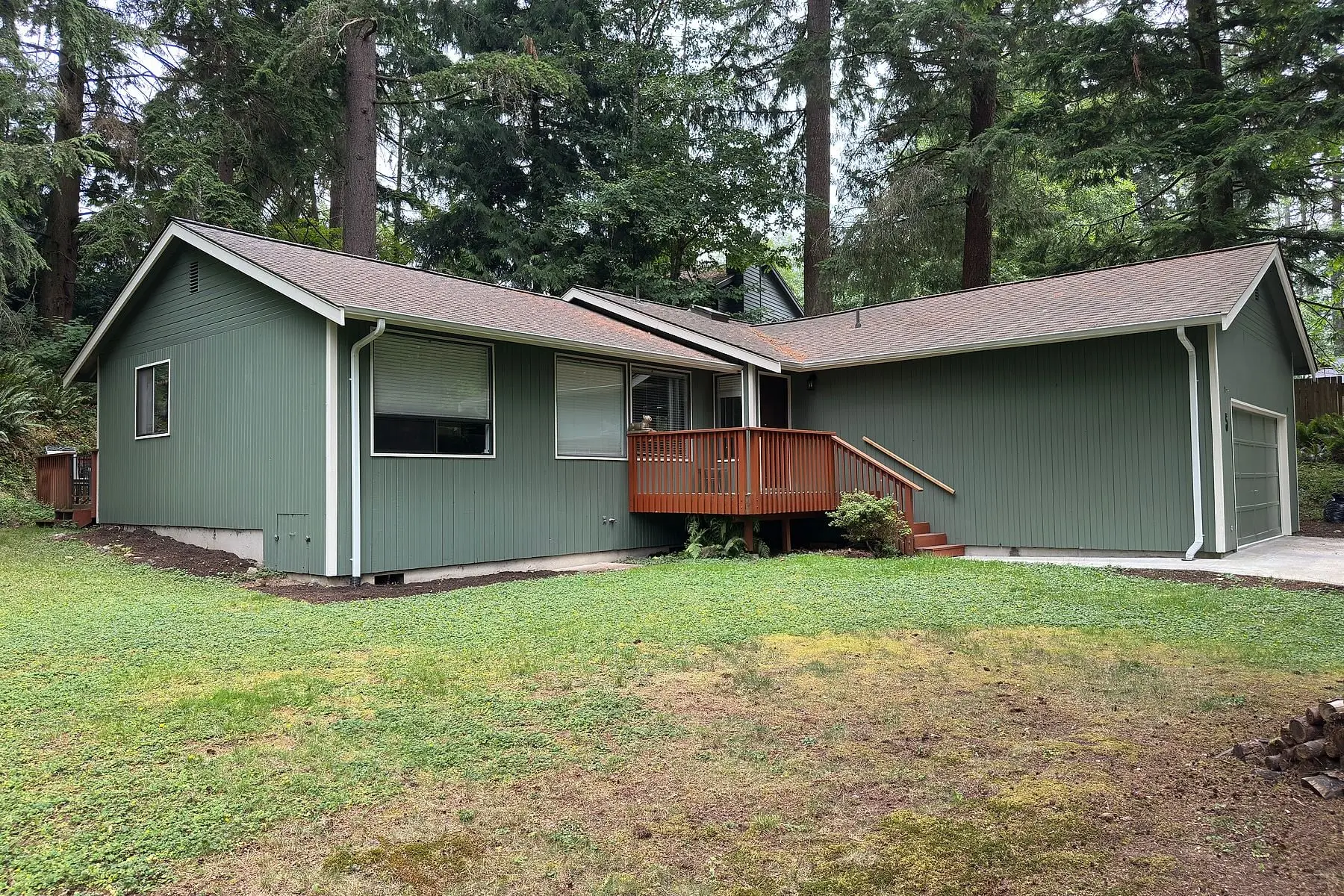
Stain or Paint Your Deck? What Lasts Longer in the Rain
Pacific Northwest decks take a beating from the top and the bottom. Here’s how penetrating stains actually compare to film-forming paints over five years, and which one your deck is a candidate for.
The Core Difference: Film vs. Penetration
Everything about this decision comes down to where the product lives.
Paint forms a film on top of the wood. It’s a continuous barrier sitting on the surface, and it gives you total color control and excellent UV protection.
Stain penetrates into the wood. It colors and protects from within the fibers rather than bridging over them.
That distinction decides how each one fails, and on a horizontal surface in a wet climate, how something fails matters more than how it looks on day one.
What Our Rain Does to a Deck
A deck is the hardest exterior surface there is. It’s horizontal, so water sits on it instead of running off. It’s walked on, so the finish takes abrasion. And critically, most decks are open underneath, which means moisture moves up through the boards from below.
That last point is what sinks deck paint. Moisture rising from the underside pushes against the film from behind. The film blisters, then peels, and once it starts, it goes in patches that are difficult to feather back into the surrounding finish.
Stain doesn’t have that failure mode. Because it lives in the wood rather than on it, rising moisture passes through. When stain wears out, it fades and thins gradually rather than lifting.
The failure difference shows up in the maintenance. A worn stain is washed and recoated. A failed paint film has to be stripped or sanded off first, which is often more labor than the original job.
When Stain Is the Right Call
For most decks here, it is. Choose stain when:
- The deck is open underneath, as the vast majority are
- The wood is in reasonable condition and you want to see its texture
- You want the lowest-effort maintenance cycle over the long run
- The deck gets standing water or heavy shade
Within stains, you’re choosing how much pigment you want. Transparent shows the most grain and protects the least. Semi-transparent is the common middle. Solid-color stain gives you paint-like color coverage while still behaving like a stain. It’s the option we reach for most often on older decks where the wood has weathered unevenly.
When Paint Makes Sense
Paint earns its place on:
- Railings, balusters, and posts: vertical surfaces that shed water and don’t get walked on
- Covered porches with a roof over them and enclosed framing below
- Decks where the color has to match painted trim exactly
That’s why you’ll often see the right answer on one structure being both: solid stain on the walking surface, matching paint on the rails. We did exactly that on a Bellingham craftsman: porch and steps in a durable deck coating, posts and trim in exterior paint.
Realistic Maintenance Cycles
In our climate, on an exposed horizontal deck:
- Transparent and semi-transparent stains need attention every 2–3 years
- Solid-color stains typically go 3–5 years
- Paint on a walking surface may look fine for a few years and then fail suddenly rather than gradually
Covered and partially shaded decks stretch all of those out. Full-sun south-facing decks compress them.
The recoat is what makes stain economical: clean, let it dry, and apply. There’s no stripping step, which is where deck paint gets expensive on its second round.
Prep Is Still Most of the Job
Whichever you choose, the finish only performs if the prep did.
Wash thoroughly to remove mildew, algae, and the gray oxidized layer on weathered wood. Let it dry. Decks need longer than siding because the boards hold water at the joints. Sand any splintering or raised grain. Replace boards that are soft or cupped; no coating rescues rotten wood. Set popped fasteners below the surface.
Key Takeaways
- Stain penetrates and wears gradually; paint forms a film and eventually peels
- Most PNW decks are open underneath, and rising moisture is what kills deck paint
- Solid-color stain gives paint-like coverage with stain-like failure behavior
- Paint is right for railings, posts, and covered porches
- Expect 2–3 years on transparent stain, 3–5 on solid, and budget stripping if paint fails
Deck work usually happens alongside the rest of the exterior. See our exterior painting process, or browse finished decks and porches in our project portfolio.
Common Questions