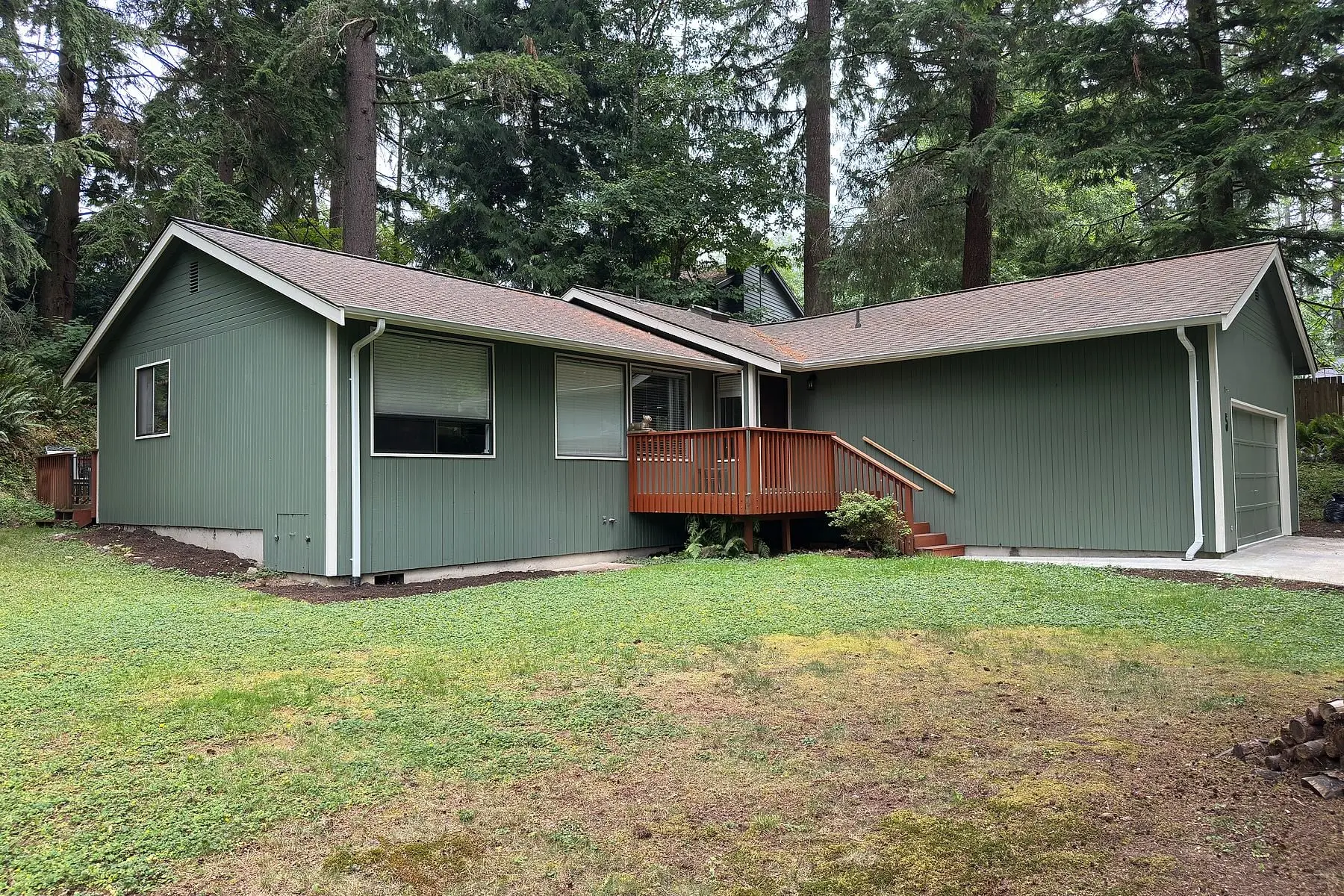
7 Exterior Color Palettes That Hold Up in PNW Light
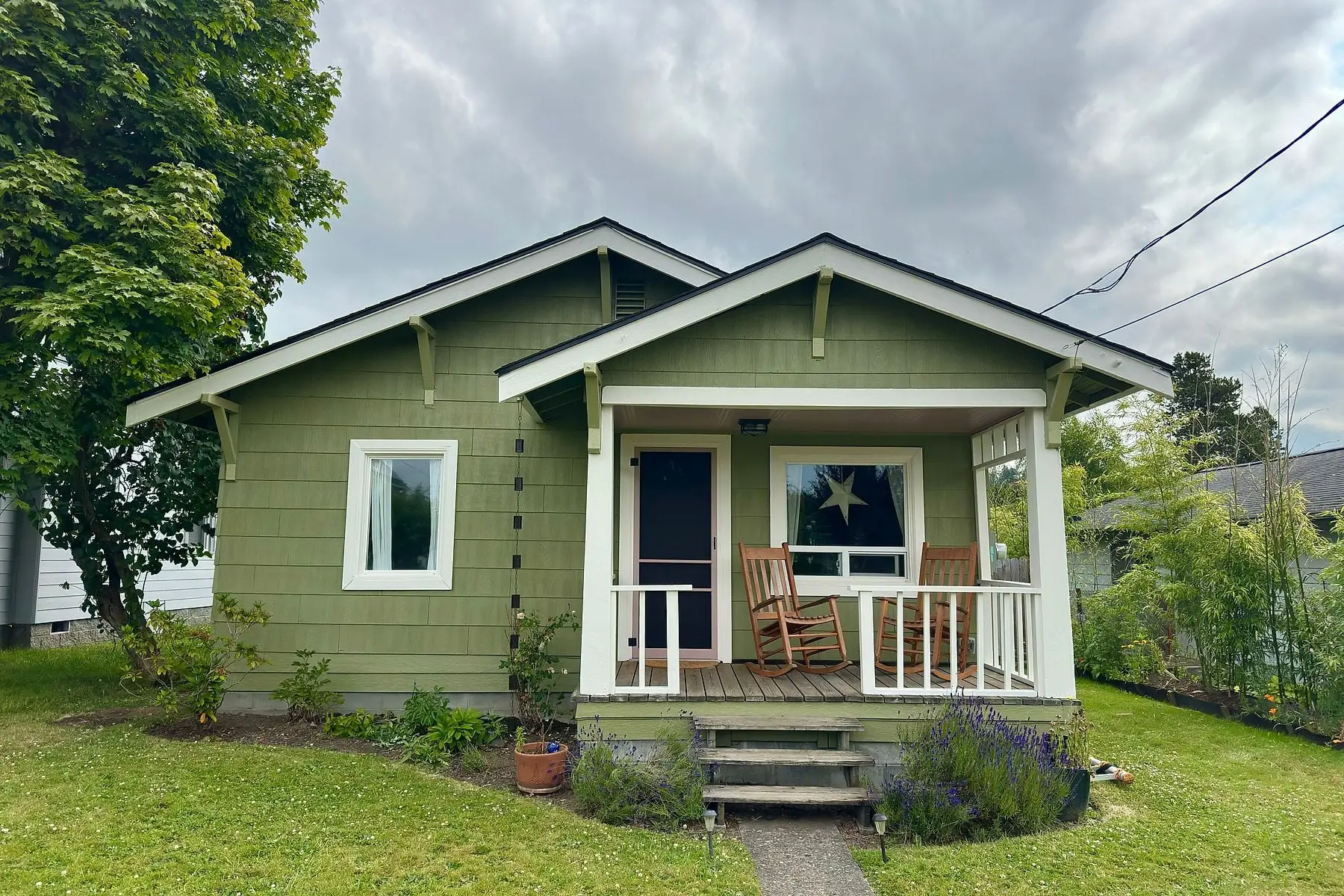
Gray skies change how color reads on a house. These seven palettes were chosen and applied on real Whatcom County homes, with the Sherwin-Williams codes so you can pull them at the store.
Why Color Reads Differently Under Our Sky
Overcast light is cool, diffuse, and low-contrast. It does three predictable things to exterior color:
It mutes warmth. Beiges and tans that looked inviting on a sunny showroom chip can read flat and dirty under cloud cover.
It deepens cool colors. Blues, greens, and grays gain depth and richness here that they don’t have in harsher southern light. This is why the Pacific Northwest palette skews the way it does.
It flattens mid-tones. Colors in the middle of the value range can lose definition entirely on a gray day. Contrast between body and trim has to work harder than it would elsewhere.
The practical takeaway: choose colors under the light they’ll actually live in, not under store fluorescents.
The Seven Palettes
1. Deep blue-gray body, bright white trim. SW 7665 Wall Street with crisp white. Reads sophisticated rather than cold, and holds its character on overcast days when a lighter blue would wash out. We used this on a Bellingham ranch and it anchors long, low rooflines beautifully.
2. Near-black teal with cream. SW 6237 Dark Night, trimmed in SW 7574 Echelon Ecru. Dramatic and modern. Dark bodies hide the dirt and algae streaking our climate produces, and cream trim keeps the whole thing from feeling severe.
3. Sage green with warm white. SW 9130 Evergreen Fog with SW 7551 Greek Villa. The most requested palette we paint, and for good reason: it sits naturally against evergreens instead of fighting them.
4. Historic two-green craftsman. SW 0014 Sheraton Sage body with SW 7736 Garden Sage picking out brackets and knee braces, trim in SW 7012 Creamy. Period-correct for our older bungalows, and the second green makes the architectural details visible from the street.
5. Warm brown with a botanical door. HGSW 0045 Antiquarian Brown, Creamy trim, and SW 9128 Green Onyx on the front door. Warm bodies are harder to pull off here, but brown works where beige doesn’t. It has enough depth to survive the gray.
6. Soft gray-green with bronze accents. SW 9130 Evergreen Fog with SW 7048 Urbane Bronze on the front door. The bronze door is the whole trick. One small, dark, high-sheen element gives the eye somewhere to land.
7. Stucco in muted green with a moody door. Evergreen Fog on stucco, SW 7551 Greek Villa trim, SW 6264 Midnight on the doors, and SW 0077 Classic French Gray on the porch. Four colors sounds like a lot; on a bungalow with distinct elements, it reads as one intentional scheme.
Dark front doors are the highest-return color decision on the list. It’s the smallest amount of paint on the house and the first thing anyone notices.
Test Color the Way It Will Actually Be Seen
Paint chips lie, and they lie worse here than in sunnier places.
Brush out a large sample, at least two feet square, directly on your siding, not on a board held up against it. Do it on two sides of the house: one that gets sun and one that stays shaded. Then look at it three times: morning, midday, and evening, and at least once on an overcast day.
Colors routinely shift a full step in either direction between those conditions. The one that looked perfect at 2pm in July can read completely different in November.
Trim and Accent Rules That Hold Up
Keep trim lighter than the body, unless you’re deliberately going for a modern monochrome look. Light trim defines edges, and edge definition is exactly what gray light takes away.
Limit yourself to three colors on most houses: body, trim, and accent. The seventh palette above uses four because the porch is a genuinely separate surface with different wear requirements.
Match the sheen to the job. Satin on siding, satin or semi-gloss on trim, and high sheen on doors where you want the light to catch.
Key Takeaways
- Overcast light mutes warm colors and deepens cool ones
- Cool greens, blues, and grays are the reliable performers here
- Dark bodies hide algae streaking better than light ones
- Brush out two-foot samples on two sides of the house, and check them on a gray day
- Keep trim lighter than the body, cap it at three colors, and spend your boldness on the front door
Every color above came off a real Whatcom County project. See them on finished homes in our project portfolio, or talk through a palette for your house with our exterior painting crew.
Common Questions